

Snowflake on the dashboard: an ice warning, not a fault
The outside temperature is approaching freezing, and the road can be icy even when it looks dry. This is information, not a fault.
Can you keep driving?
Yes, but adjust your speed and your following distance.

What the warning actually means
The symbol is a snowflake or an ice crystal, often shown next to the outside temperature. Many cars show it around 4 °C, about 39 °F, rather than at zero, because the road surface can be colder than the air.
Common causes
- A low outside temperature
- A rapid change in temperature, for example in shade or on a bridge

What to do now
- Increase your following distance and slow down, especially on bridges and in shade.
- Be extra careful right around freezing, which is the slipperiest.
- Check that your tires are suitable for the conditions.

What people often get wrong
That the symbol means there is ice on the road. It means the temperature is approaching freezing, and the sensor measures air, not asphalt.
When the car must go to a workshop
There is nothing to do at a workshop. This is the car telling you something, not warning you about a fault.
Read next
- Washer fluid light: a small light, a real safety problem
- Tire pressure light: a puncture, or just the cold?
- Traction control light: flickering, or staying on?
This page is general information and does not replace a professional assessment. Symbols, codes and behaviour vary between makes. Always check the handbook for your own car.
Other guides that fit


Know Your Car. Save on Repairs.
Practical guides that help drivers diagnose problems, avoid costly repairs, and maintain their vehicles with confidence.
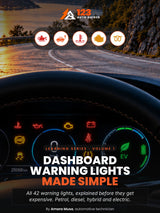
Get the guide that fits this exact problem, with the full explanation in one PDF.
$16.00 See the guide →Short checklists you can print and keep in the car, ready in seconds.
Get them free →