

Red high-voltage warning on an EV: stop and call
Stop as safely as you can, get out of the car, and call for help. Do not open the hood and do not try to diagnose it yourself: the system carries lethal voltage.
Can you keep driving?
No. Stop and have the car recovered.

What the warning actually means
The symbol is usually a car or a battery with a lightning bolt in it. It warns about a fault in the high-voltage system, meaning the traction battery and the circuit around it.

Common causes
- A fault in the traction battery or its management
- An insulation fault
- A fault detected after impact or water damage
What to do now
- Stop somewhere safe and switch the car off.
- Get out, and keep your distance if you smell anything or see smoke.
- Call roadside assistance and say it is a high-voltage warning on an EV.

What people often get wrong
That it can be diagnosed like an ordinary engine fault. The high-voltage system carries lethal voltage, and there is nothing under the hood an owner should touch.
When the car must go to a workshop
Always. This should go to a franchised dealer or a workshop with high-voltage qualifications.

Read next
- The EV will not wake up: usually the small battery, not the big one
- The turtle symbol on an EV: reduced power, not a fault
- Battery light on while driving: what it means
This page is general information and does not replace a professional assessment. Symbols, codes and behaviour vary between makes. Always check the handbook for your own car.
Other guides that fit


Know Your Car. Save on Repairs.
Practical guides that help drivers diagnose problems, avoid costly repairs, and maintain their vehicles with confidence.
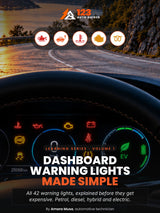
Get the guide that fits this exact problem, with the full explanation in one PDF.
$16.00 See the guide →Short checklists you can print and keep in the car, ready in seconds.
Get them free →